Open seams
When the edges come apart.
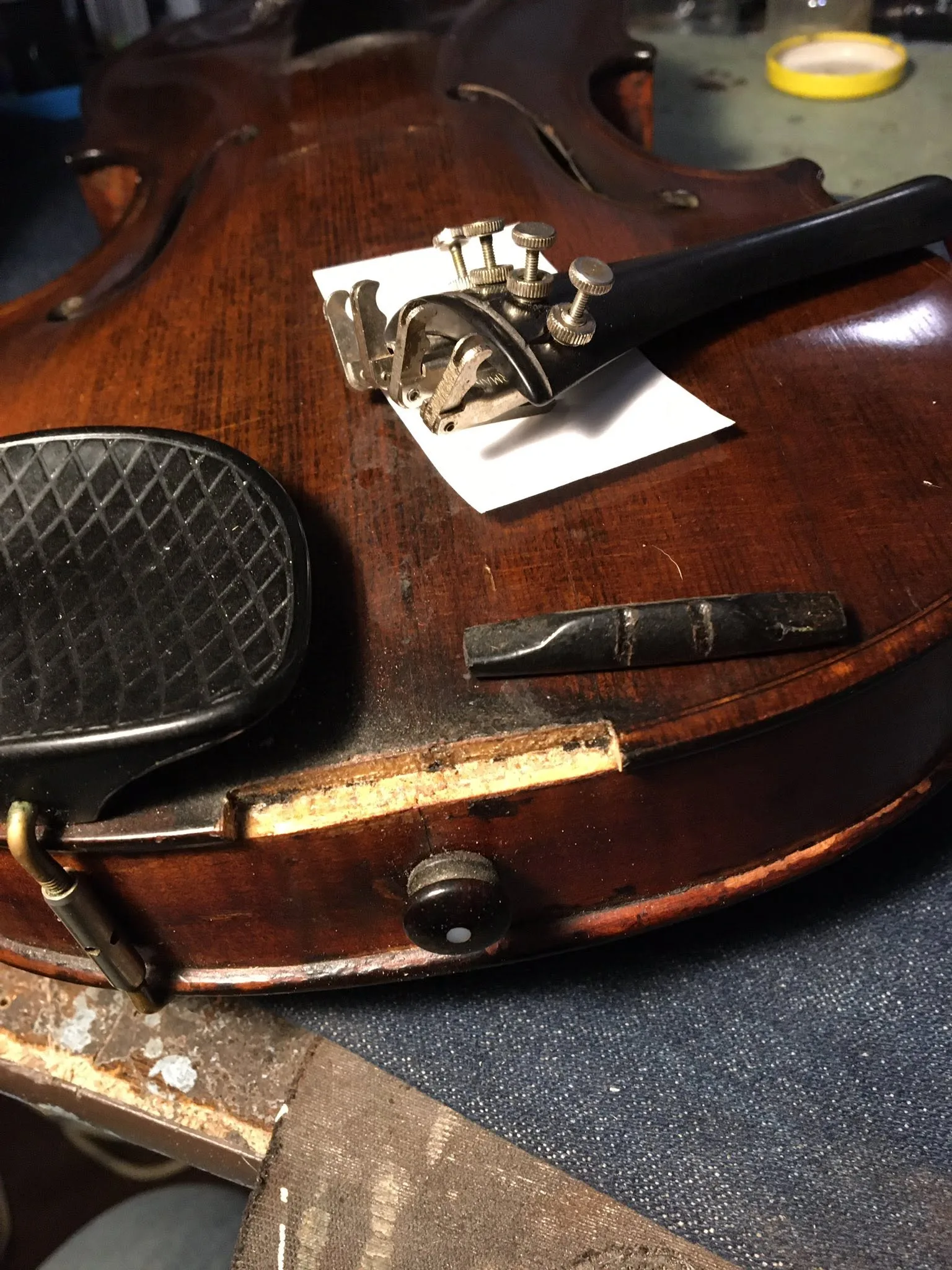
A gap where the top or back meets the ribs needs a closer look. Changes in humidity and everyday use can loosen these glued joints.
Careful cleaning, alignment and re-gluing with hide glue help restore the joint while respecting the instrument’s construction. Closing an open seam can also address a source of unwanted buzzing.
Cracks in the wood
Small lines deserve careful attention.
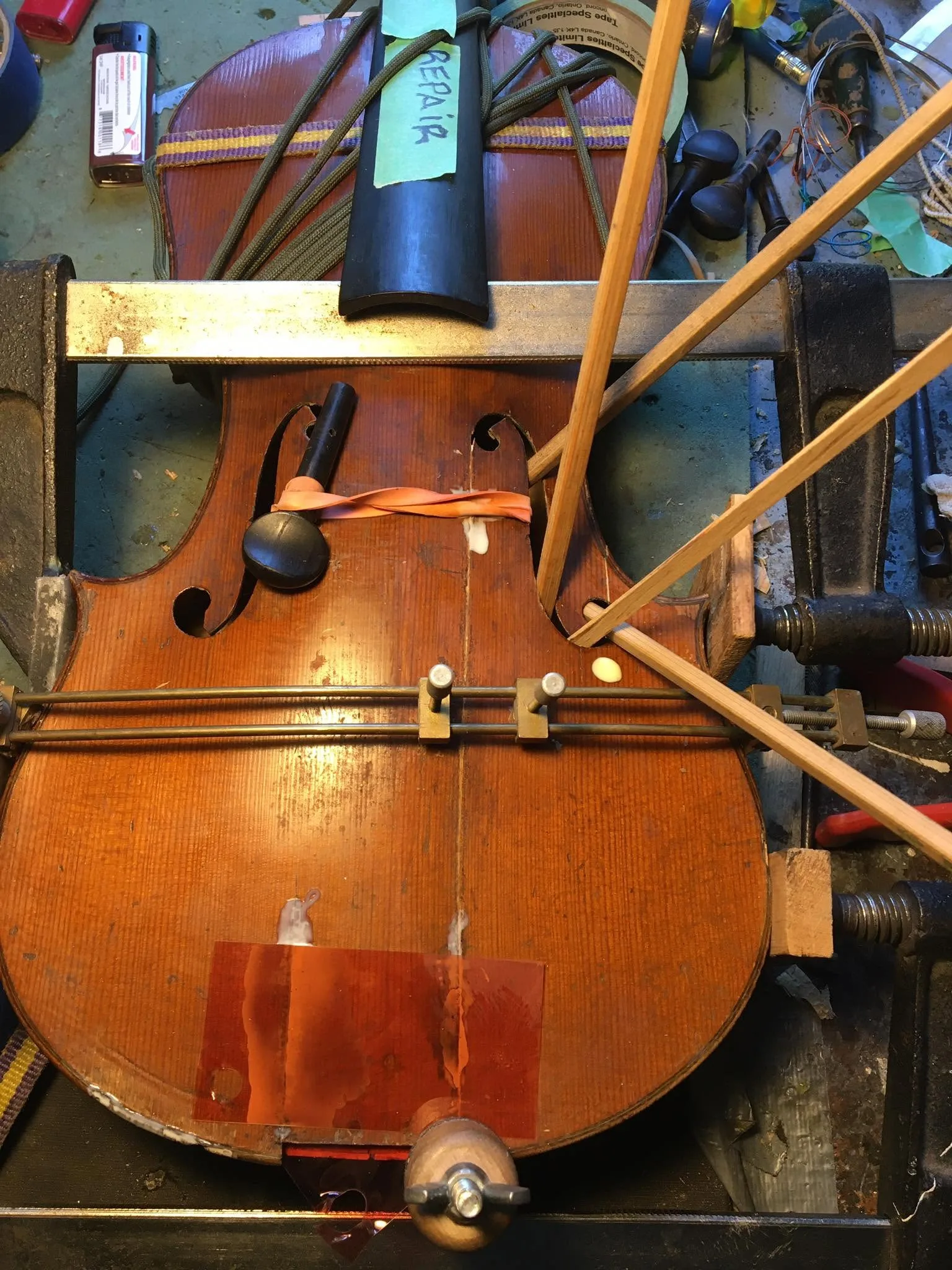
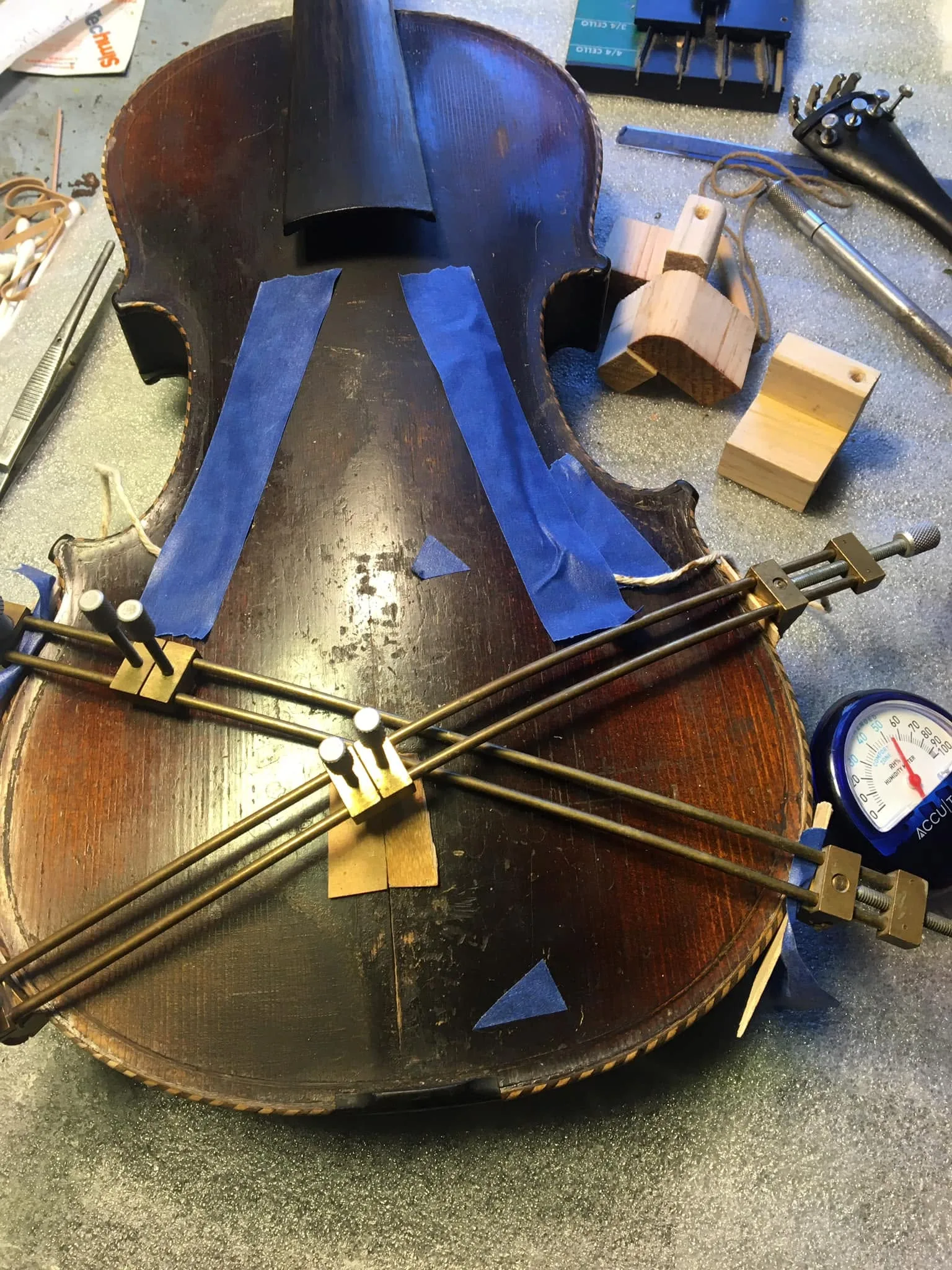
A crack is a break in the wood itself. Its location, depth and any earlier repair determine the approach.
Repair can involve aligning and gluing the crack, with internal wooden cleats where needed. The aim is to stabilize the damaged area and preserve as much original wood as possible.
Bridge replacement & adjustment
A small piece with a big role.
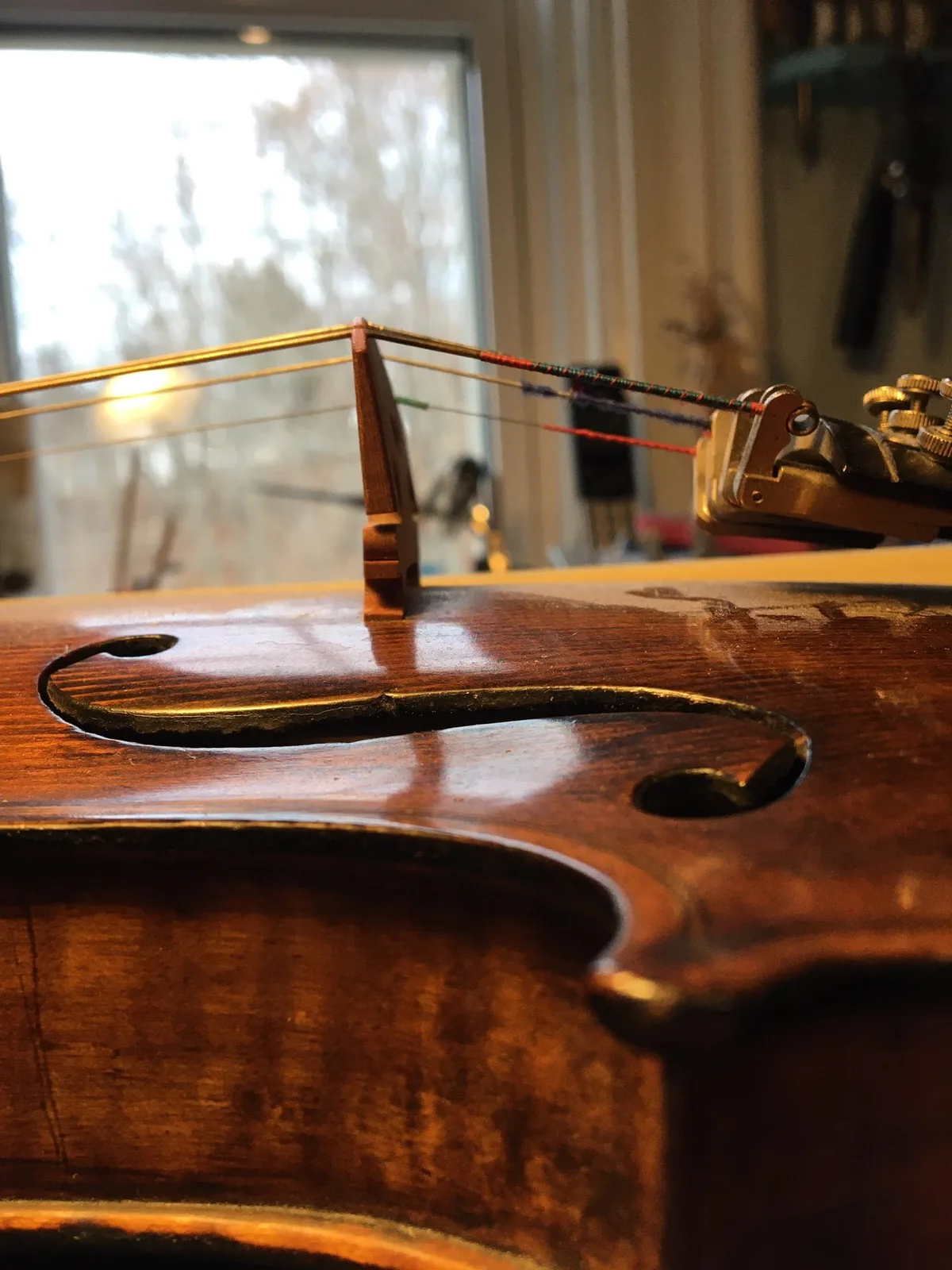
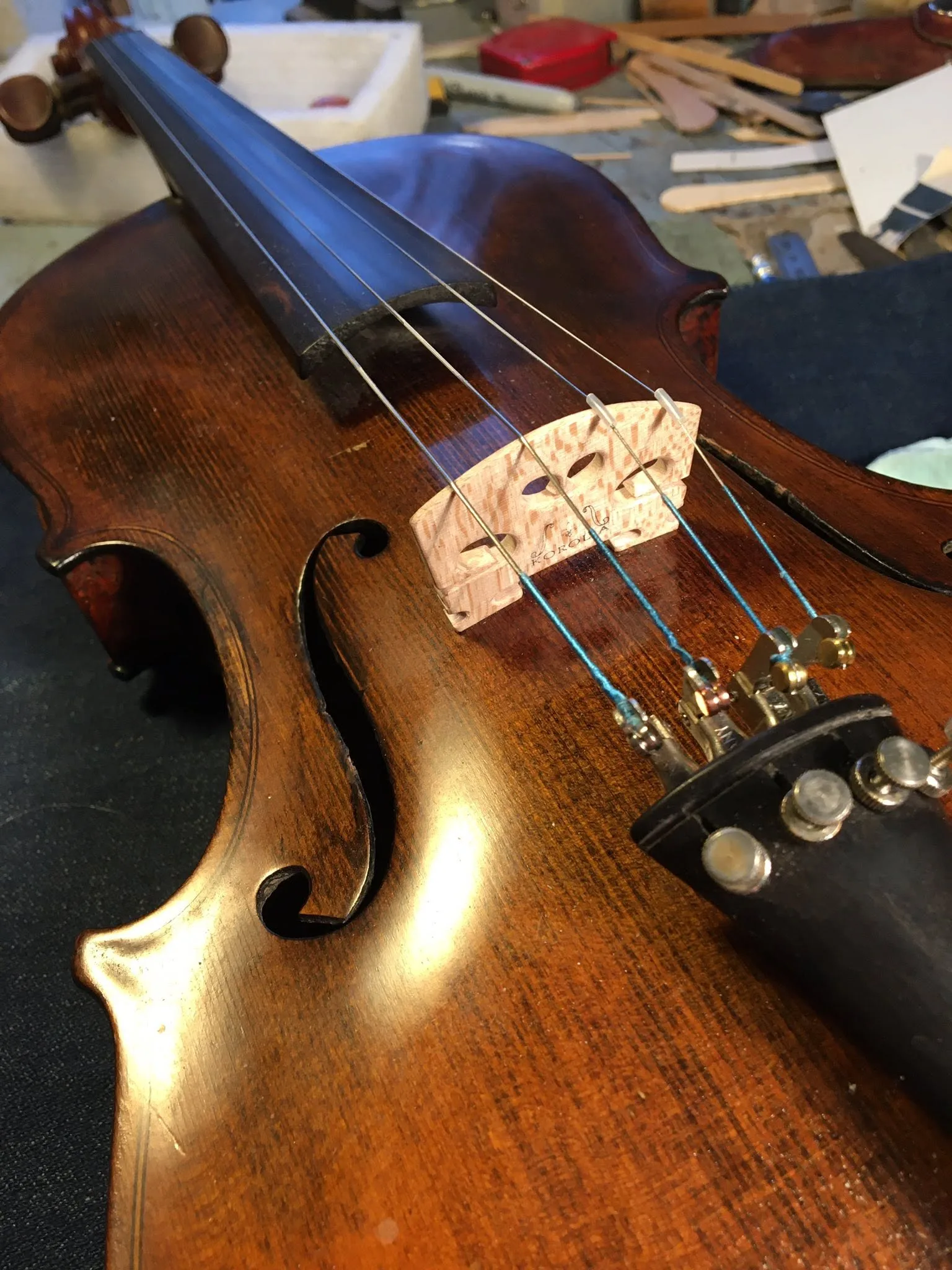
A leaning, warped or poorly fitted bridge can affect string height and playability. Each bridge must fit the individual instrument.
Assessment helps determine whether adjustment or a replacement is appropriate. A carefully fitted bridge supports the strings and carries their vibration into the body.
Peg fitting & bushing
Make tuning less of a struggle.
Pegs that slip, stick or no longer fit properly can make tuning frustrating. Worn peg holes may need attention too.
The work may involve refitting or replacing pegs, or bushing worn holes before fitting them again. A sound fit helps the pegs turn smoothly and hold their position.
Sound post adjustment
Care for the instrument’s inner balance.
The small spruce post inside the body connects the top and back. If it shifts or falls, its fit and position need professional assessment.
Sound post work is delicate: fit and placement affect support and response. Peter can assess the post as part of the instrument’s overall setup.
Re-stringing
Fresh strings. A fresh start.
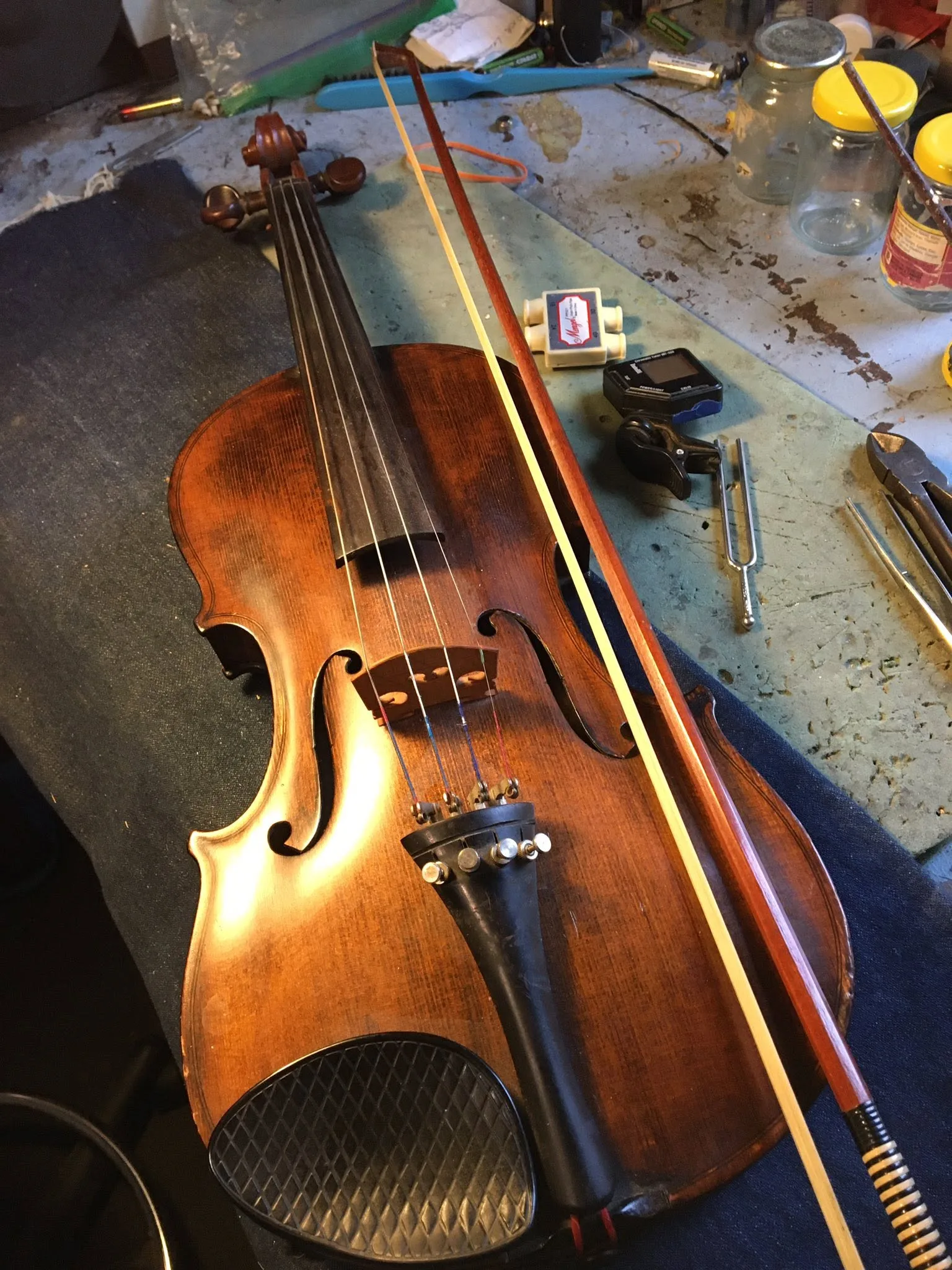
Broken, worn or unravelling strings interrupt playing and can leave an instrument feeling tired. Re-stringing replaces a single string or a full set as needed.
It is also a useful opportunity to discuss string choice and have the bridge and tuning setup checked. Tell Peter what you play and how you want the instrument to feel.