Open seams
When the top or back separates from the ribs, careful cleaning and regluing with warm hide glue bring the joint back together.
From a stubborn tuning peg to a more involved structural repair, the right work begins with a close look at your instrument.
When the top or back separates from the ribs, careful cleaning and regluing with warm hide glue bring the joint back together.
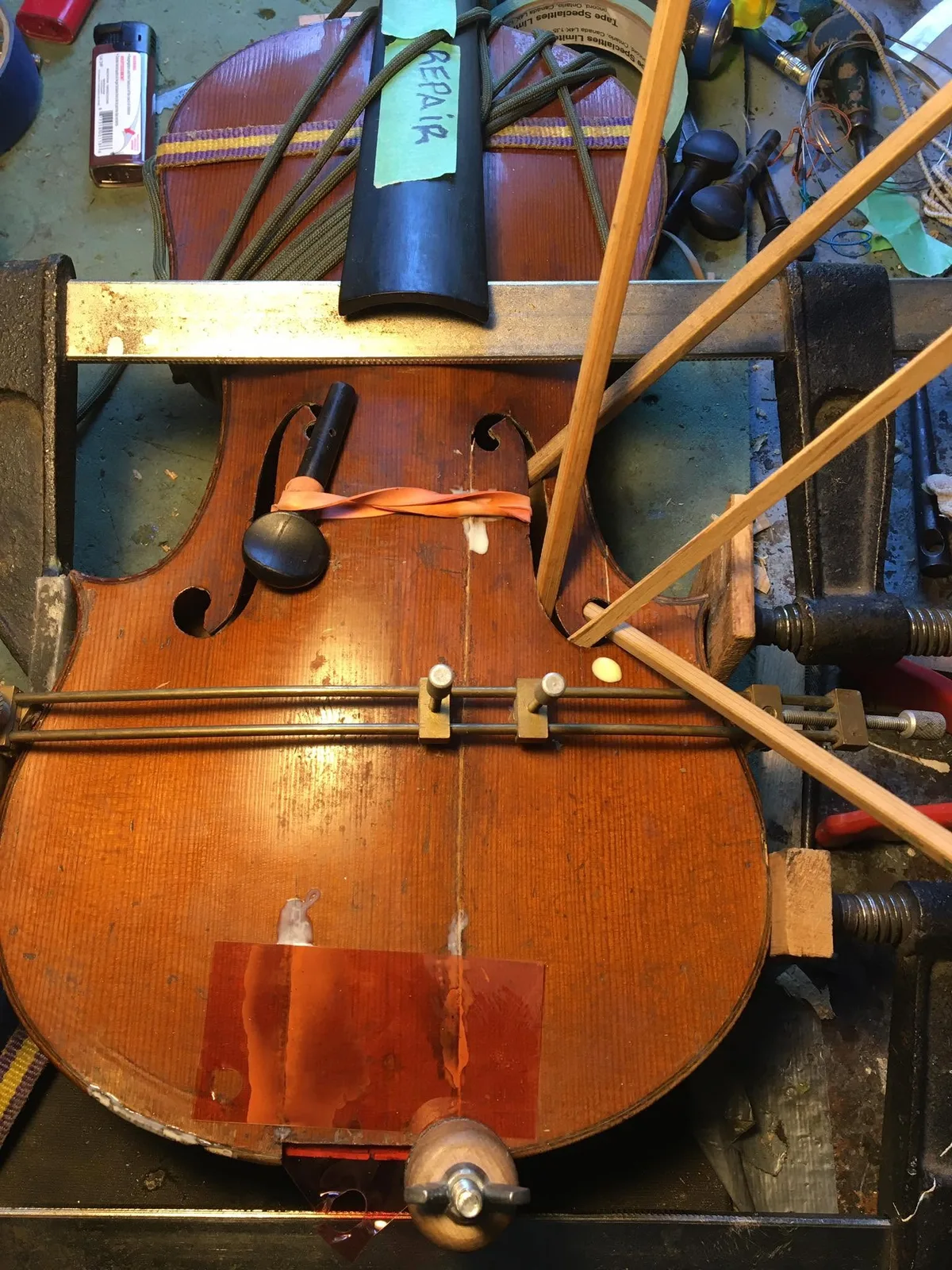
Dry conditions can cause wood to shrink and split. Repair may involve aligning and gluing the crack, careful clamping, and small interior wooden cleats where needed.
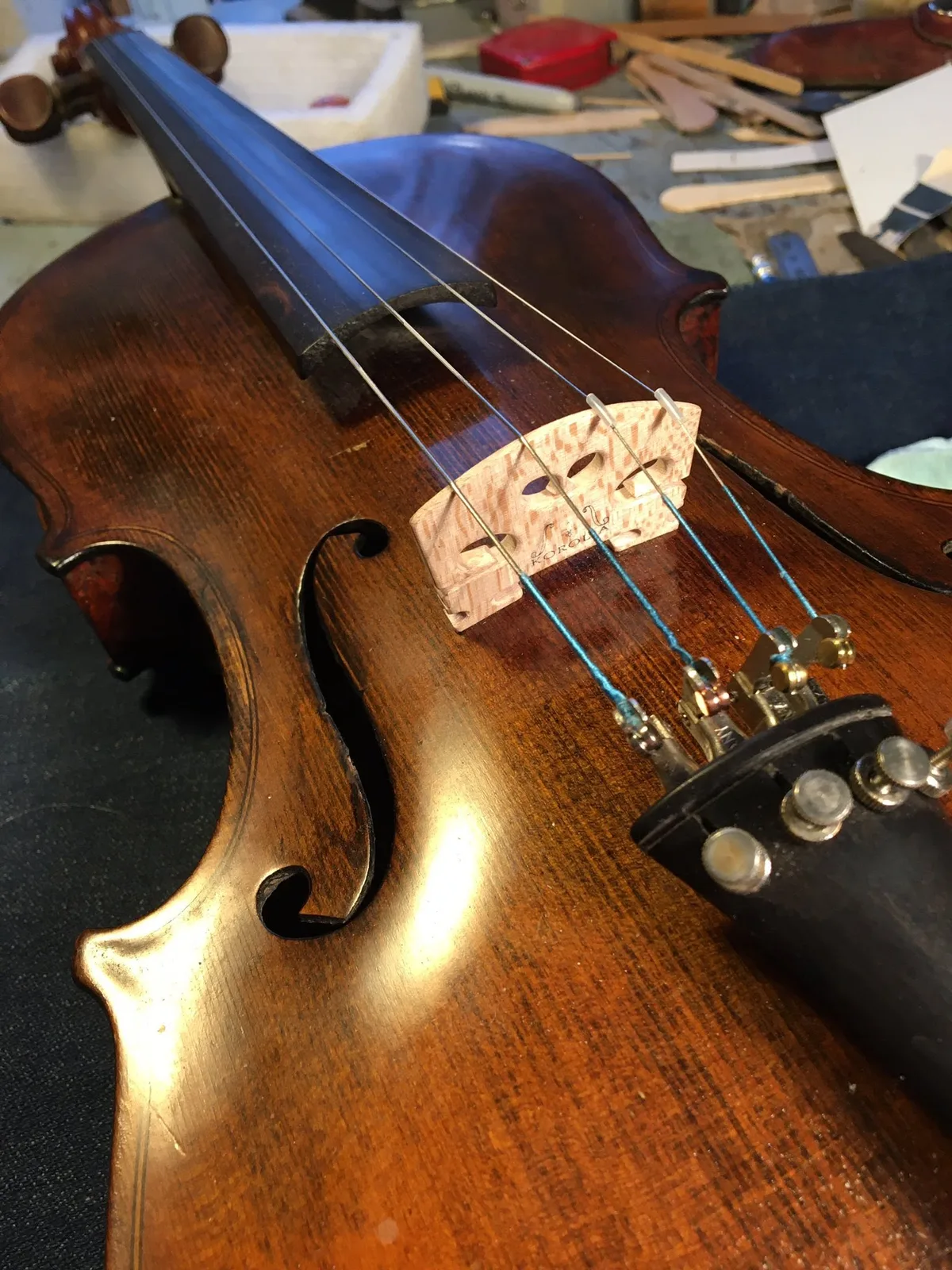
A leaning, warped, or poorly fitted bridge can affect string height and tone. Assessment determines whether an adjustment or a newly fitted bridge is the right approach.
Slipping or sticking pegs make tuning frustrating. Refitting or replacing pegs can help; worn pegbox holes may need wooden bushings to restore a sound fit.
This small spruce post helps support the top and transmit vibration inside the instrument. A shifted, fallen, or poorly fitted post needs precise fitting and positioning.
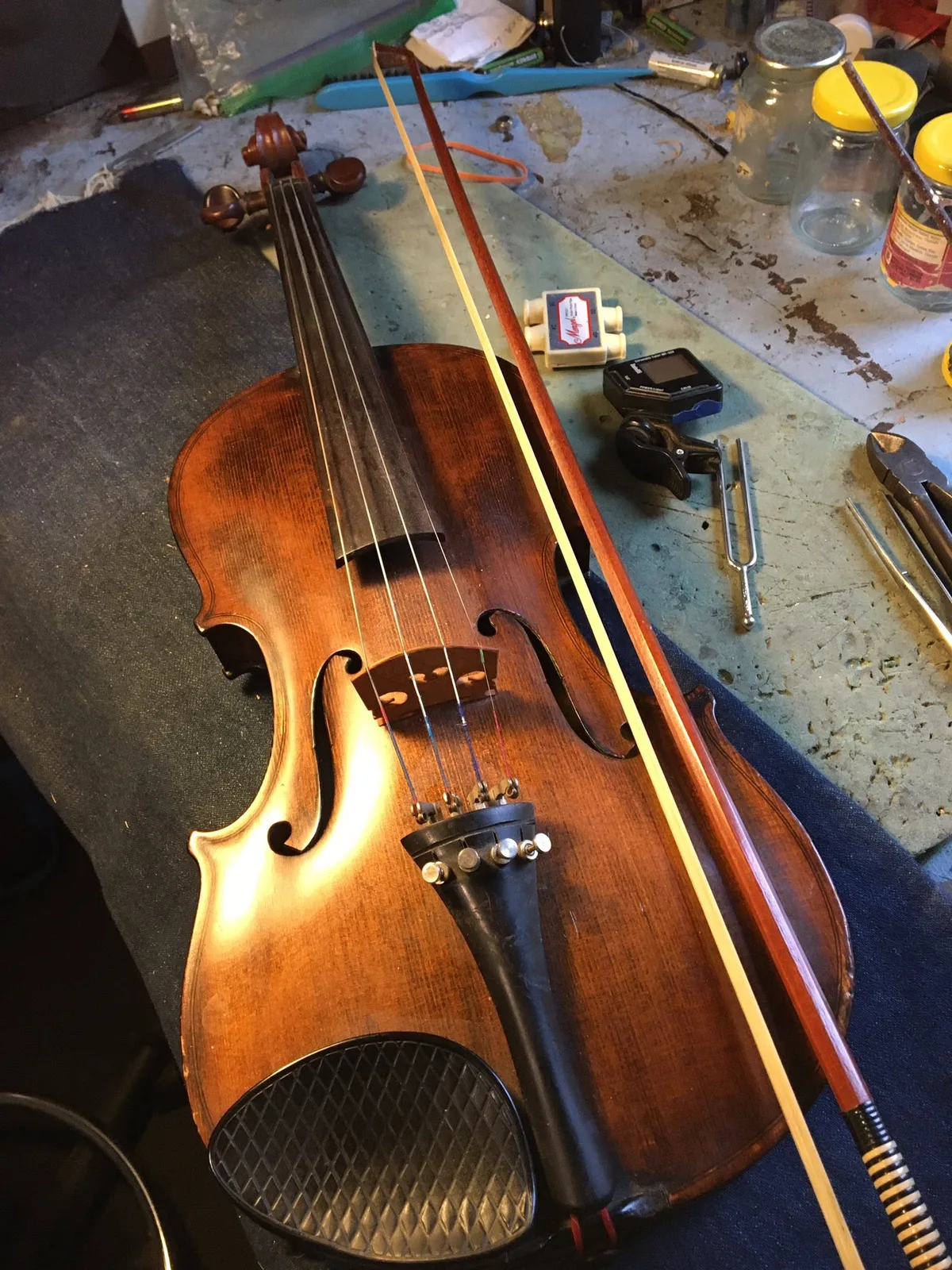
Fresh strings can bring new life to a well-played fiddle or violin. Replace worn or broken strings, with careful fitting and tuning to get your instrument ready to play.
Not sure what’s wrong? Start with a conversation.
Ask Peter about a repairPeter also works on fingerboards, nuts, necks, and instrument bodies. The condition of the wood, earlier repairs, and the way you play all help shape the approach.
Get in touch to discuss the problem, an assessment, and the next steps. Photos can be a useful starting point.
Discuss your repair ↗“Pete resurrected a violin of mine that was at death's door, and made it not just live, but sing”
“He knows his stuff and will do great work at a very reasonable price”
“The look on her face when she played it was priceless. It sounds SO good.”
“Ole Blue Dog has done many pieces for me in the past, mostly aged furniture and chairs are a specialty of his.”
Tell Peter about your instrument and what you’ve noticed.
Talk to Peter